
During production and transportation, crude oil, water, and fine solids may form highly stable emulsions.
These emulsions commonly result in:
- Difficult oil-water separation
- Increased water cut
- Lower export crude quality
- Higher dehydration load
- Reduced separator efficiency
Emulsion problems are particularly severe in heavy oil and high-solids systems.
Case Study 1
PROJECT BRIEF
- Block II, East of No.2 Area, Some Oilfield Located in North China, ASP Flooding
- Emulsion stability increased significantly which makes the breaking more difficult
- OIW significant high in discharging water from Free Water Knockout
- EB optimization work needed
CHALLENGE
- ASP concentration getting higher in the produced fluid from Nov. to Dec., 2014 (Surfactant 70-80mg/L , Polymer 500-600mg/L, pH 9.6-9.8 )
- The breaking of ASP combined with oil & water emulsion is getting more difficult
- 35ppm dosage of 2 kinds EB which were using at that time
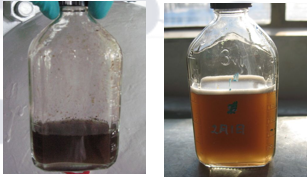
- OIW is about 11,000mg/L in the discharging water
The Optimizaton of EB
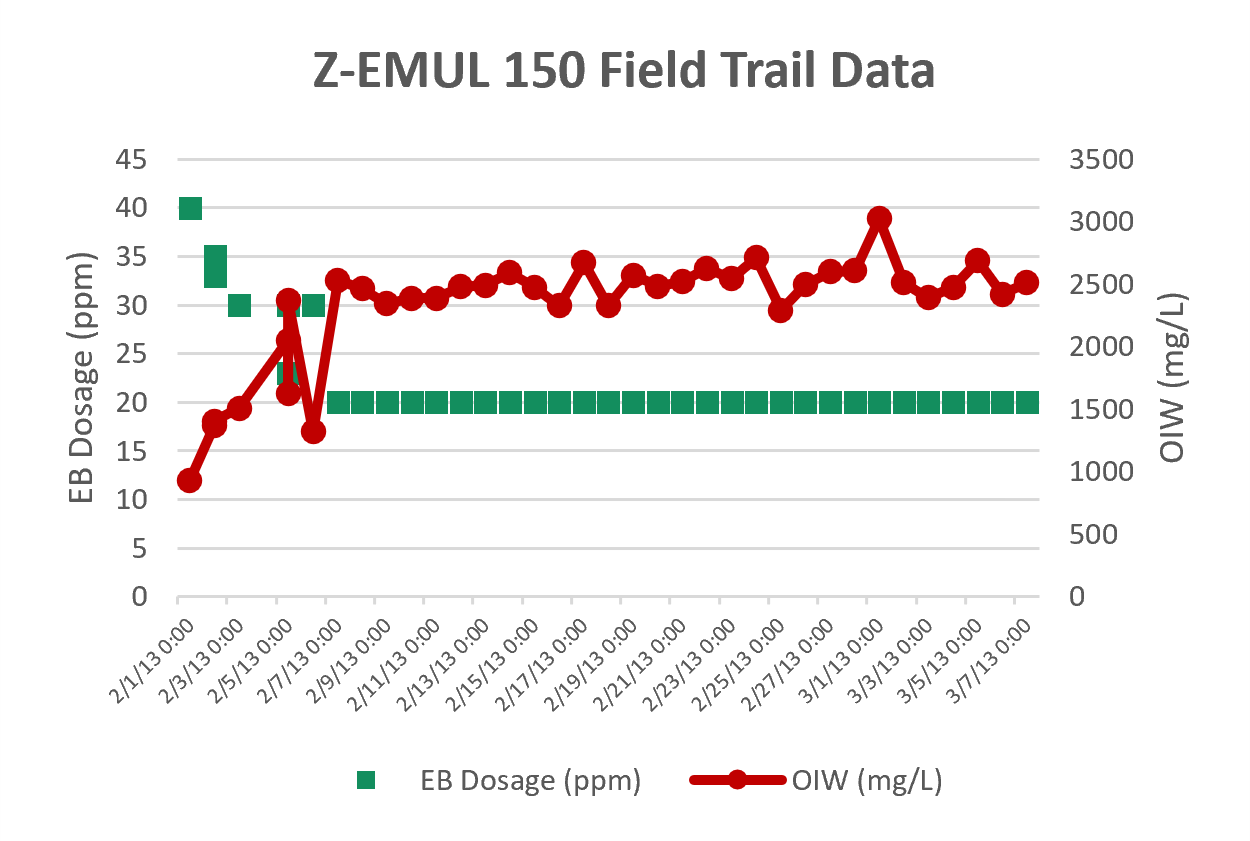
- When Z-EMUL 150 dosage is 35-40 ppm, OIW is about 1,000 mg/L
- 20 ppm Z-EMUL 150 dosage and OIW is about 2,500 mg/L for better cost-effectiveness
Case Study 2
CHALLENGE
- X-1 Process Station at an oilfield in North China
- 30,000m3/d (90% is water), which includes about 7,000 ~ 8,000m3/d liquid from ASP flood
- ASP flooding operation started from May, 2015
- Electric current of EDD was running higher continuously as the quality of produced fluid became unstable
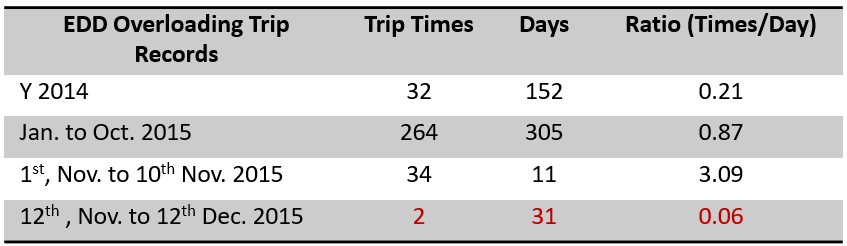
- EDD overloading trips frequently, or shutdown and maintenance needed
- BS&W and OIW of disqualified sometimes
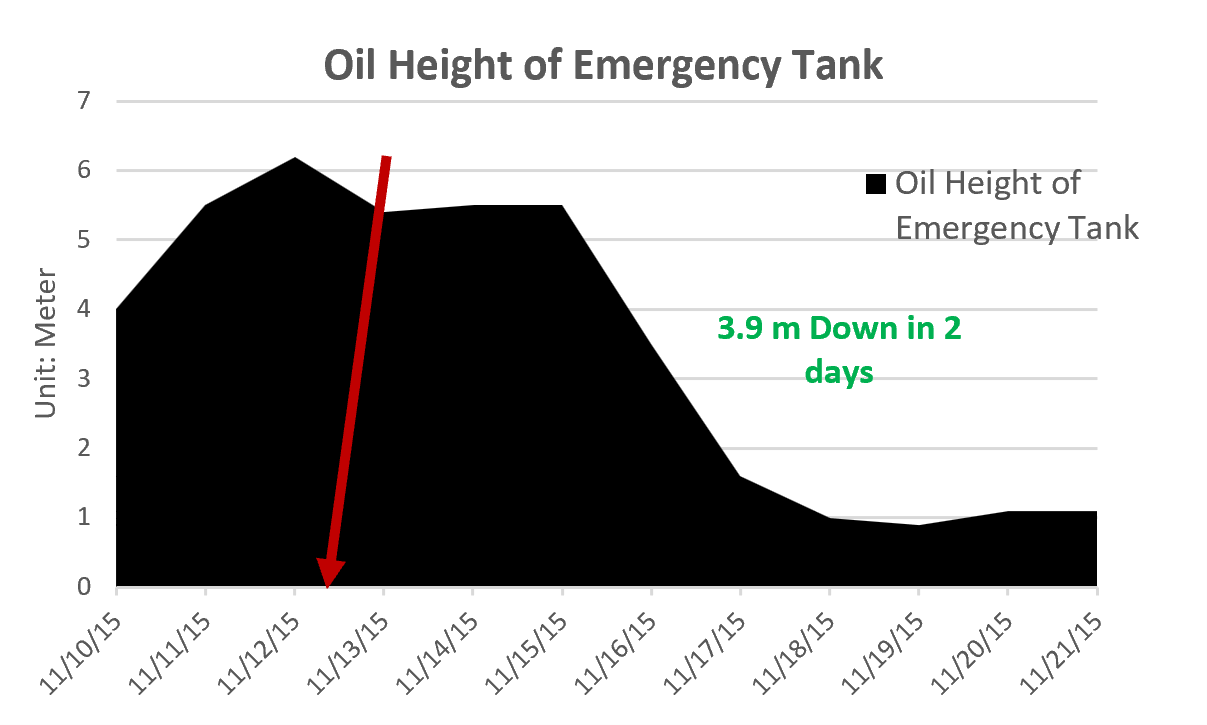
- Liquid level of Emergency Tank running too high
- EB optimization work needed
RESULTS
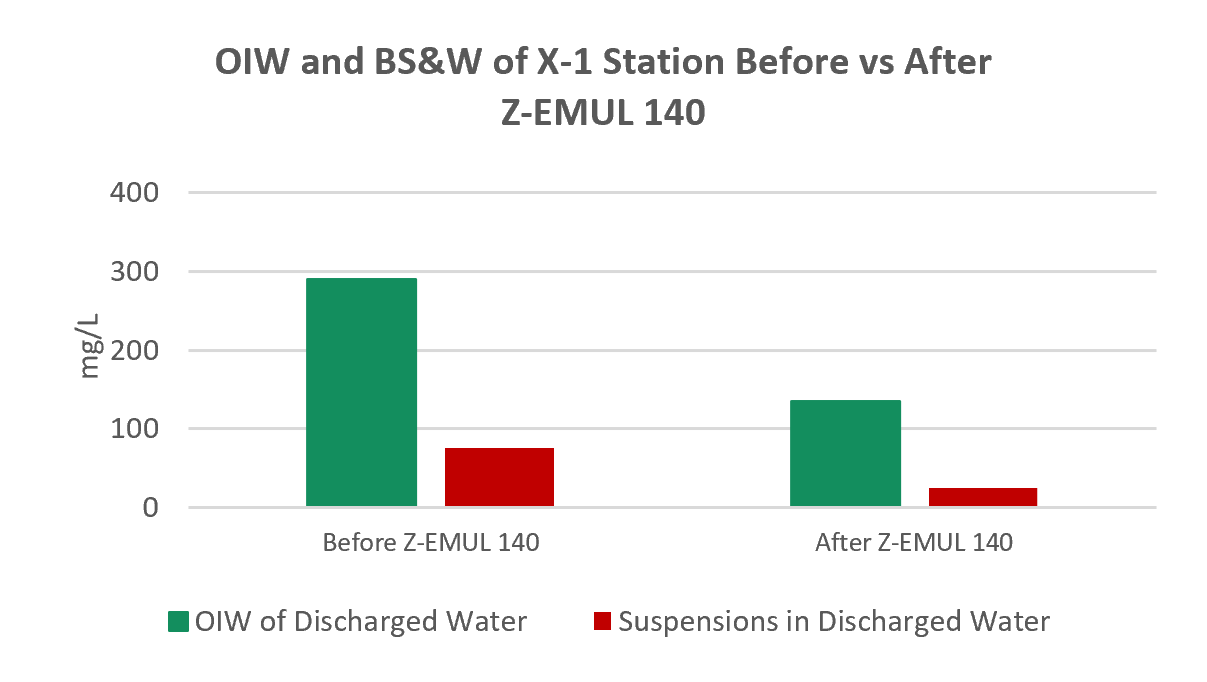
- OIW and suspended solids in the discharged water reduced significantly
- The frequency of trips reduced to the lowest of the latest 2 years, all 4 EDD in operation and current & voltage running smoothly
- Only 2 overloading trips and restored in very short time after Z-EMUL 140 injected
- Z-EMUL 140 could be used as routine Emulsion Breaker as well as EB for oil from emergency tanks, without any affection to the normal production
- OIW of discharged water is about 0.116% (from 0.06 to 0.18%)