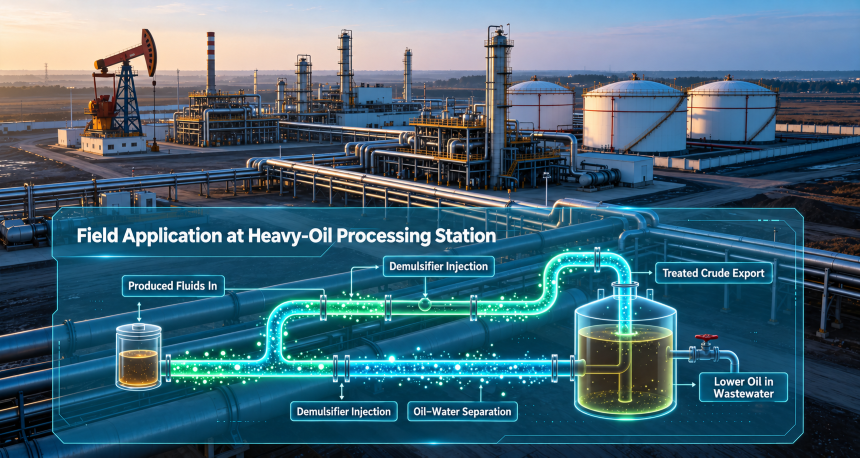
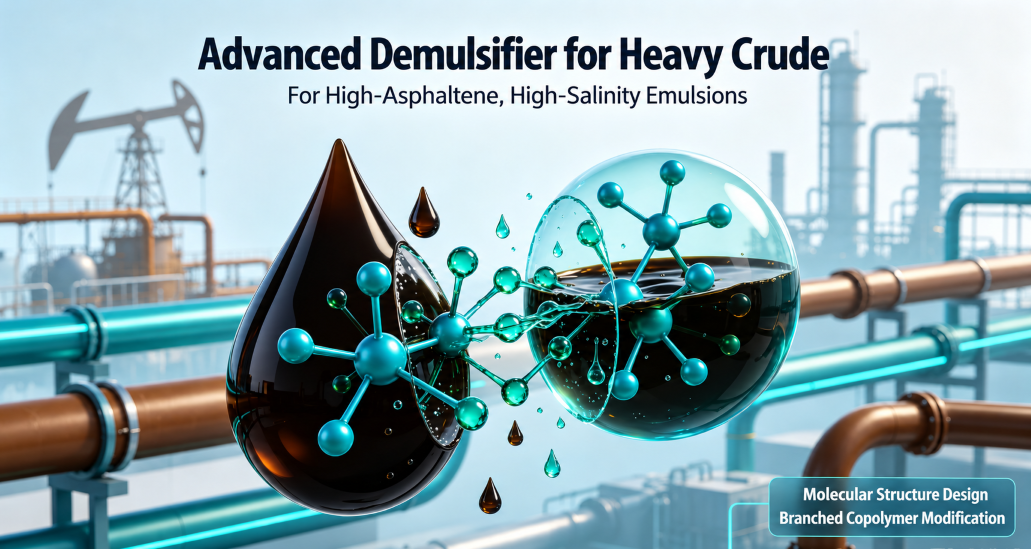
Heavy crude production fluids often contain substantial amounts of resins, asphaltenes and fine solids. These components can form a resilient film at the oil–water interface, stabilizing the emulsion and making separation more difficult. Under high-viscosity or high-salinity conditions, some conventional demulsifiers may require higher dosages, act slowly or show limited adaptability. Operators may then need to raise the process temperature or extend the settling time, increasing energy use and operating costs.
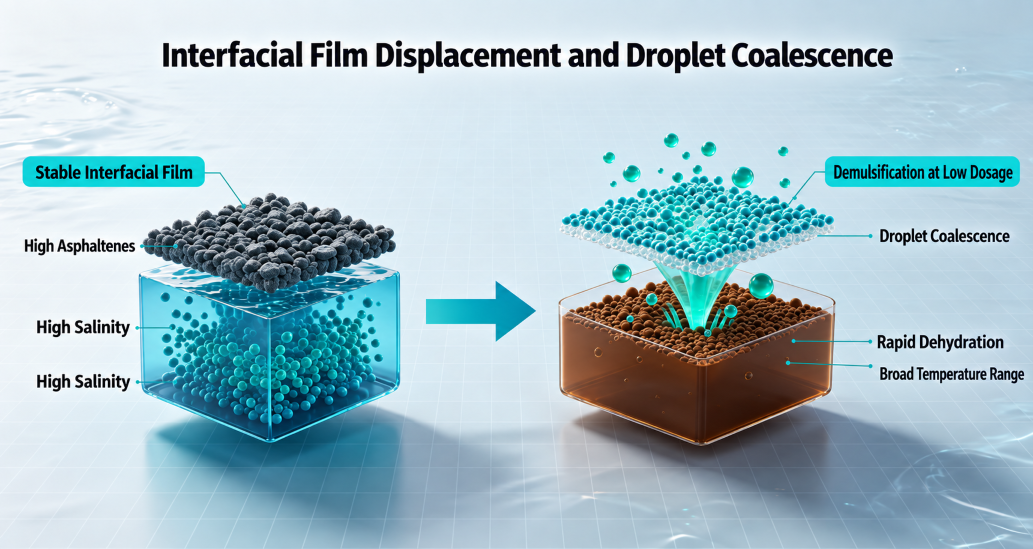
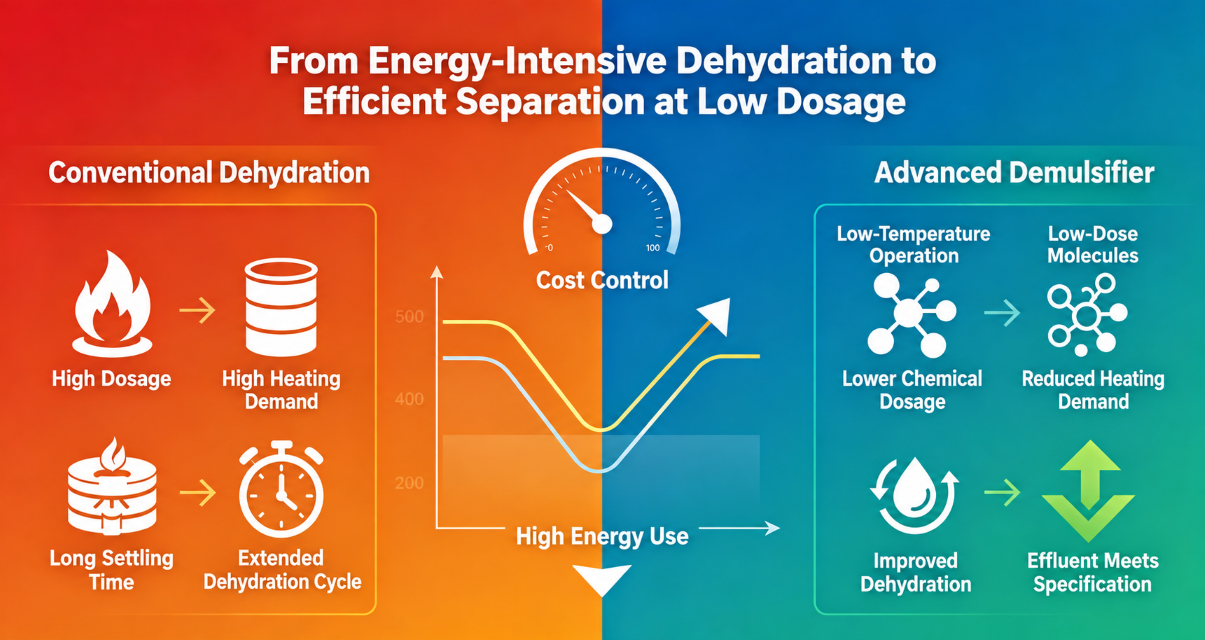
The R&D team addressed these challenges through a branched molecular design and combined chemical modification. By tuning the balance between hydrophilic and lipophilic groups, the formulation promotes adsorption and displacement at the oil–water interface, disrupts the interfacial film and encourages water droplets to coalesce and settle. It is also designed to perform across a broad temperature range and at high salinity. Field application results indicate faster dehydration of heavy crude and improved oil–water separation, with potential reductions in chemical consumption and heating demand. The actual dosage should be determined by bottle testing and on-site adjustment based on crude properties, water content, temperature and process conditions.
The technology is suitable for thermal heavy-oil production, heavy-crude gathering and transportation, and dehydration at central processing facilities. GN New Chem will continue to refine its formulations for different operating conditions and provide tailored demulsification and dehydration solutions for individual fields.