
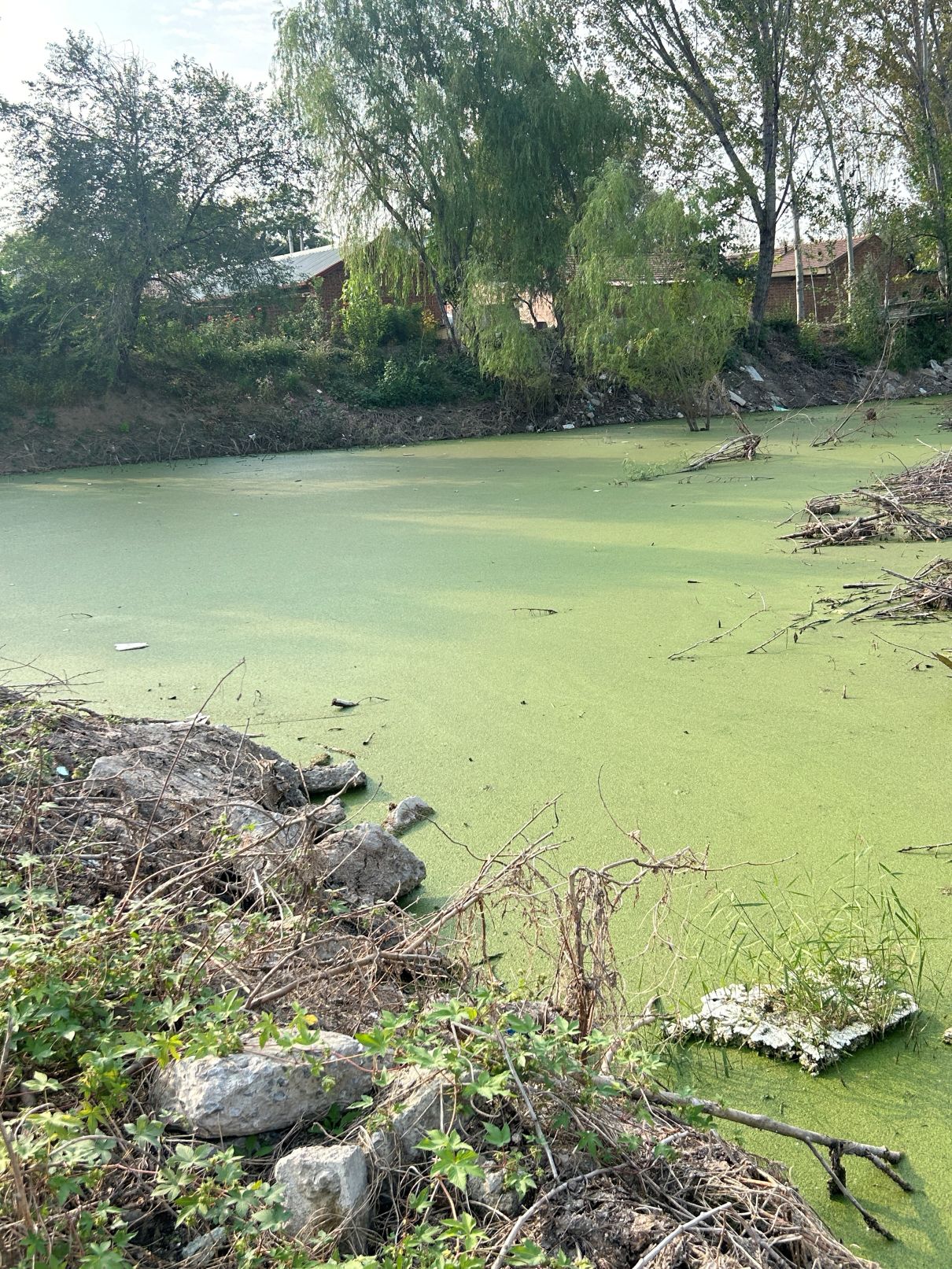
Blooms reduce water clarity and cause fluctuations in dissolved oxygen; as the algae die and decompose, they consume even more oxygen. Some cyanobacteria also produce cyanotoxins. An effective response must therefore control the bloom promptly while protecting water quality, rather than relying on indiscriminate chemical treatment.
Assess, test and then implement
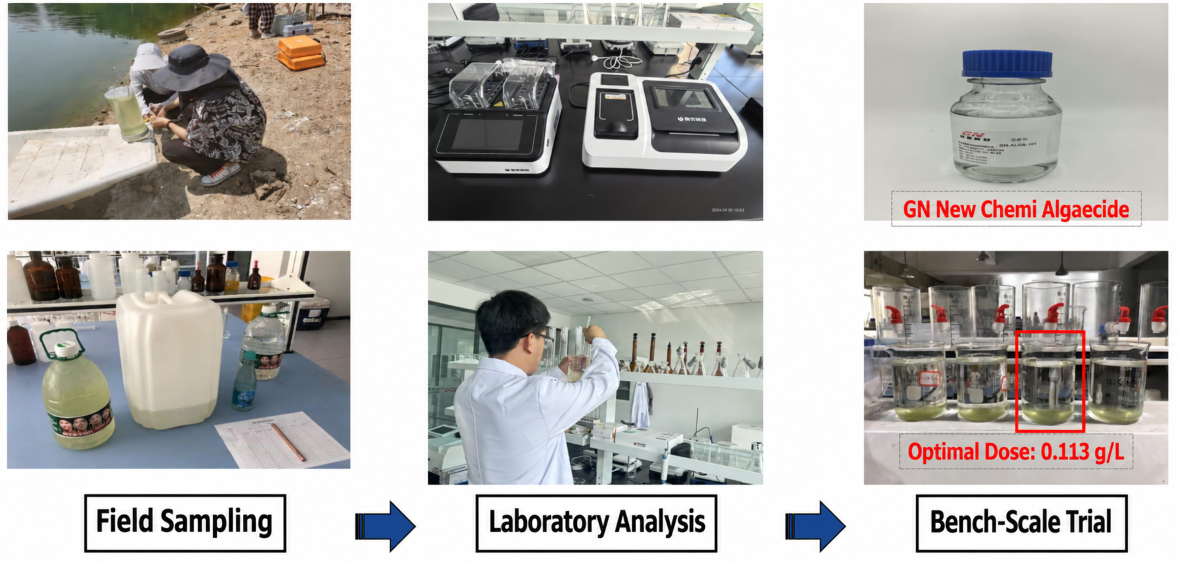
A sound response starts with water testing, moves to bench-scale trials and then proceeds to field implementation. Samples should first be collected at multiple locations and analyzed for total nitrogen, total phosphorus, pH, dissolved oxygen, turbidity and algal cell density. Water temperature, depth and flow conditions should also be considered when assessing the bloom. Bench-scale trials can then identify suitable treatment chemicals, combinations and dosages, while evaluating algal removal, coagulation and settling, and changes in water quality. The selected treatment should be rolled out by zone, with continued monitoring. Chemical selection must reflect the intended use of the water body, the dominant algal species and site conditions to avoid overdosing and secondary impacts.
An integrated approach: control blooms, reduce nutrient inputs and restore the ecosystem
Algal bloom management requires both an immediate response and long-term restoration. During an acute bloom, appropriate algae-control or coagulation measures can be combined with mechanical harvesting and aeration to reduce algal biomass and support dissolved oxygen. Longer-term measures should limit external nitrogen and phosphorus inputs, reduce nutrient release from sediments, and restore natural self-purification through aquatic plants, beneficial microorganisms and other ecological measures. Monitoring and early warning complete the program, shifting management toward nutrient control, in-water management and ecosystem restoration.
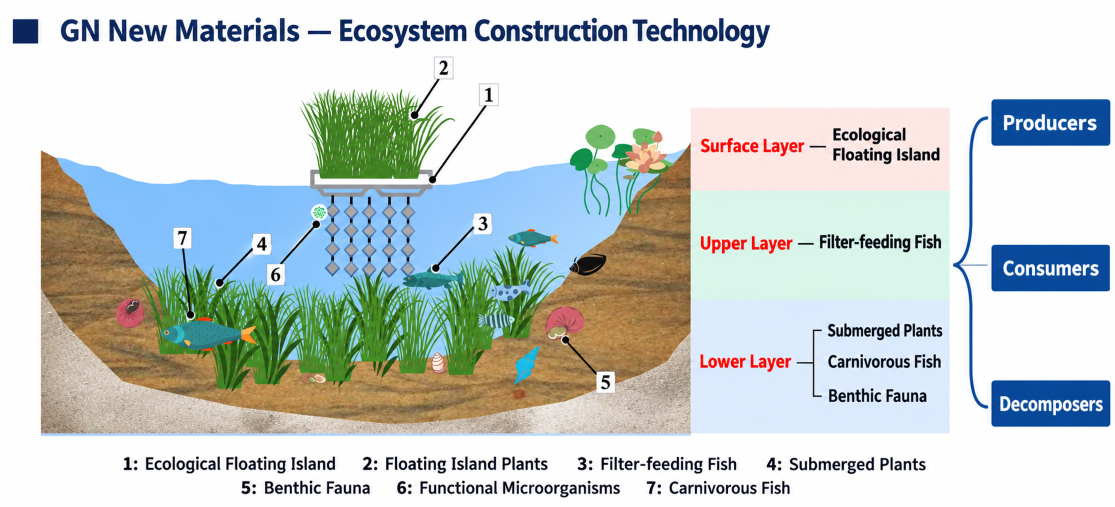
GN New Chem provides integrated algal bloom management for rivers, lakes and reservoirs. Drawing on water-quality testing, chemical development and field support, we design treatment programs, select suitable chemicals, implement them on site and monitor results.