
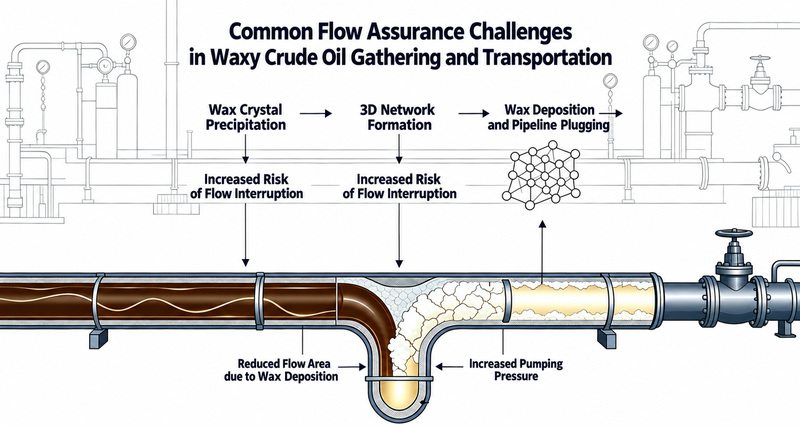
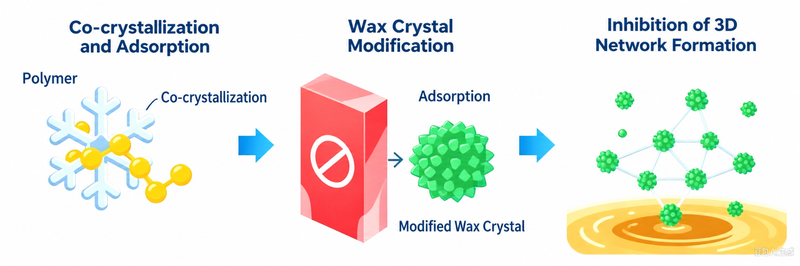
Conventional methods, such as heating and dilution with lighter hydrocarbons, can improve transportation conditions but often involve substantial energy consumption or operating costs. Pour point depressants (PPDs) influence wax crystal nucleation, growth, and aggregation, modifying crystal morphology and intercrystal interactions. By weakening the wax crystal network, they lower the crude oil pour point and improve low-temperature flowability, providing an additional chemical treatment option for safe and efficient crude oil gathering and transportation.
Pour point depression is crude-specific; no single formulation is suitable for every crude oil. Variations in wax content, wax composition, and resin and asphaltene contents can limit the effectiveness of general-purpose formulations, increase dosage requirements, or cause incompatibility with downstream demulsification and water treatment processes. Chemical screening and performance validation should therefore be based on crude oil properties and actual operating conditions.
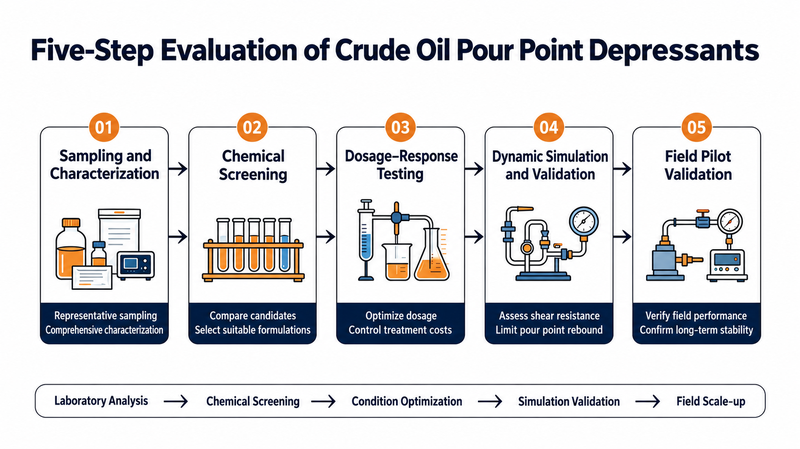
Drawing on its research and development capabilities and application testing expertise, GN New Materials Technology Co., Ltd. has established an evaluation workflow covering crude oil characterization, chemical screening, dosage-response testing, dynamic simulation, and field validation. This approach supports customized pour point depression solutions for different crude oils and transportation conditions, helping reduce energy consumption and operating costs while improving pipeline operating stability.