
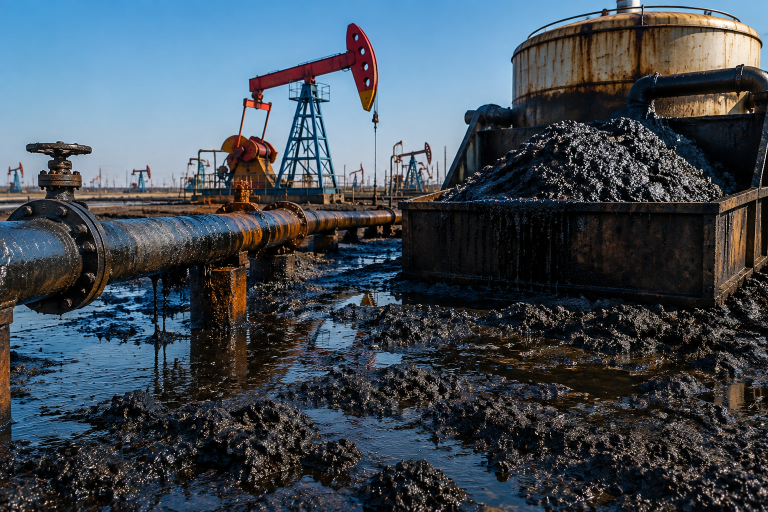
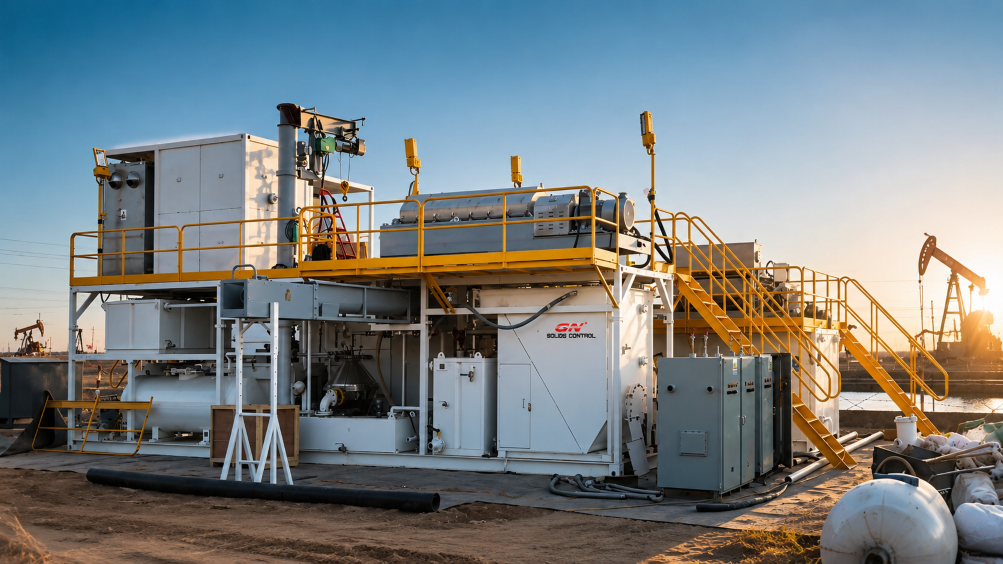
Why, then, is oil sludge so difficult to treat?
The key challenge is how to effectively disrupt the stable association among the oil, water, and solids.
I. Oil, Water, and Solids Are Difficult to Separate Naturally
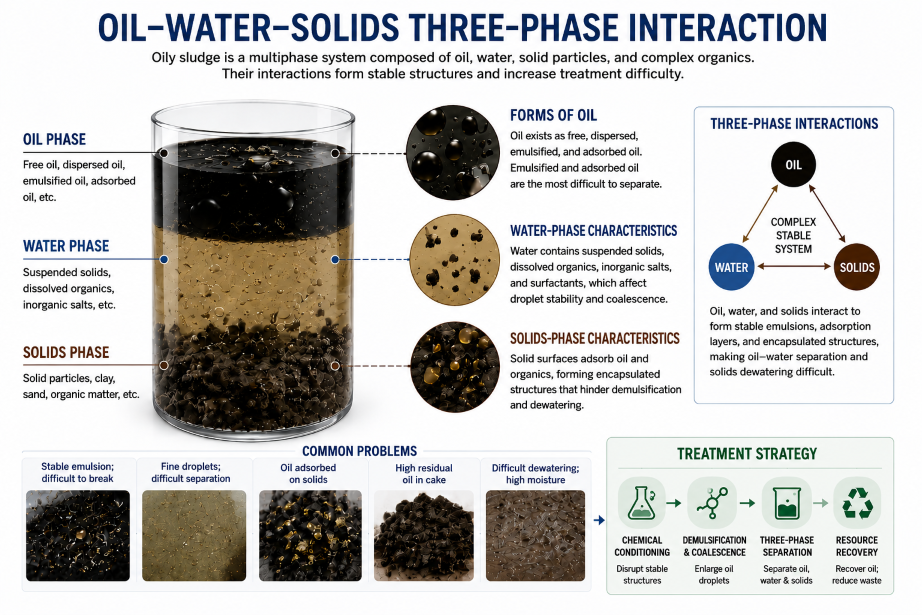
Oil in oil sludge generally occurs in several forms, including free oil, dispersed oil, emulsified oil, and oil adsorbed onto solids. Some fine oil droplets are encapsulated by or adsorbed onto solid particles, forming stable emulsified structures that hinder effective oil–water–solids separation.
II. Effective Treatment Requires Synergy Between Chemical Conditioning and the Process
Different treatment techniques are required for the respective phases:
Oil phase: Demulsification, interfacial modification, and chemical conditioning are used to reduce oil–water interfacial stability, thereby releasing and recovering crude oil.
Water phase: Coagulants, flocculants, and other treatment chemicals promote the aggregation of fine particles and improve solid–liquid separation efficiency.
Solids phase: Chemical conditioning modifies particle surface properties, reduces the residual oil content of the sludge cake, and improves dewatering performance.
III. There Is No Universal Chemical—Only a Properly Matched Solution
Because sludge from different sources varies in crude-oil properties, oil content, particle composition, and degree of emulsification, no single chemical can solve every oily-sludge treatment problem.
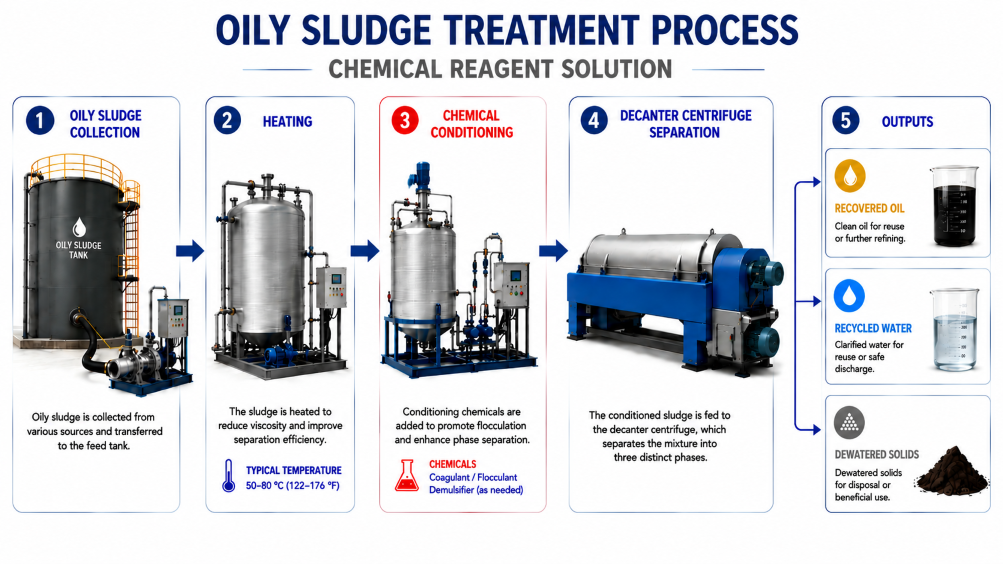
Efficient treatment requires an integrated technical workflow: “Oily-sludge characterization → Laboratory screening → Formulation optimization → Field validation.”
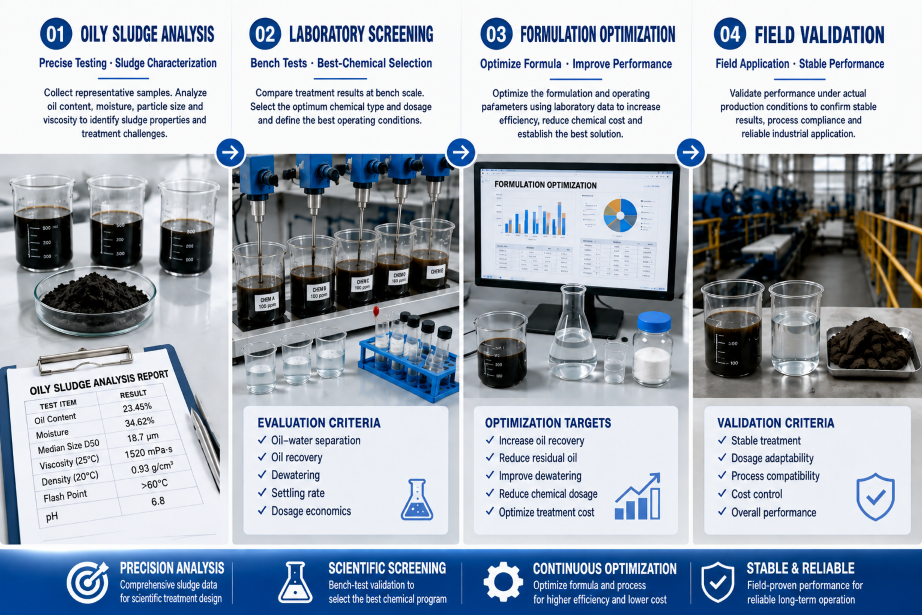
GN New Chem focuses on oily-sludge demulsification, oil–water–solids three-phase separation, sludge dewatering and volume reduction, and enhanced oil recovery from waste streams. Through a technical approach combining operating-condition assessment, laboratory validation, and formulation optimization, the company provides customers with customized chemical solutions.
Oily-sludge treatment is not merely a matter of separating oil from solids. It is about identifying an effective way to disrupt the stable oil–water–solids association—and selecting the right treatment chemicals is a critical step.