
Overview
As oilfield development progresses into the middle and late stages, the water cut of produced fluids continues to increase. Treating produced water and reinjecting it into the formation has become a critical practice for maintaining reservoir pressure, supporting stable production, and meeting environmental requirements.
Injection water systems commonly contain sulfate-reducing bacteria (SRB), general aerobic bacteria / total general bacteria (GAB/TGB), iron bacteria (FB), and other microbial populations. Once these microorganisms proliferate in pipelines, surface facilities, and formation pore spaces, they may form biofilms and dark viscous deposits, leading to localized corrosion, pipeline blockage, increased injection pressure, reduced injection rate, and potential impact on overall oilfield production performance.
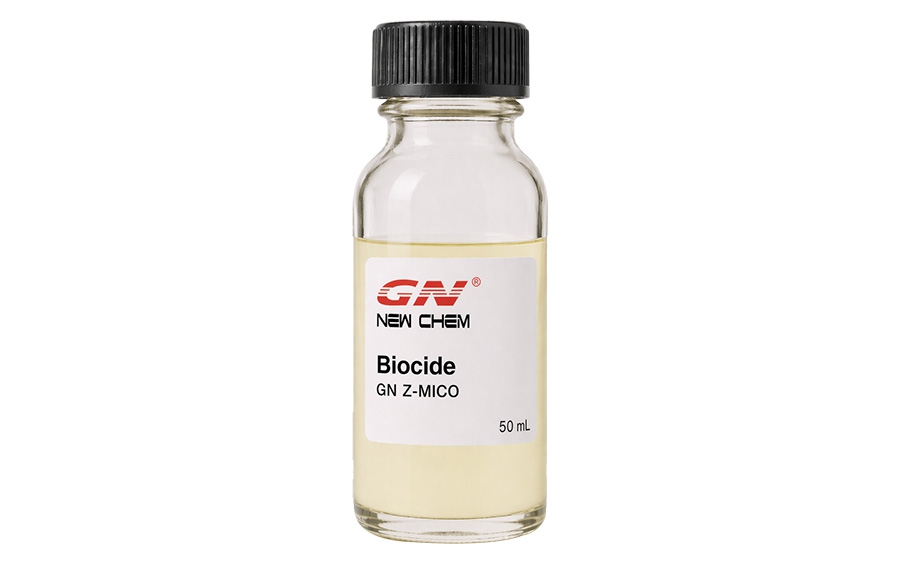
To address microbiologically influenced corrosion and biofouling in oilfield injection water systems, GN has developed GN Z-MICO series of high-performance non-oxidizing biocides, including quaternary ammonium compound-based, organic amine-based, and organic guanidine-based biocides.
This product series provides broad-spectrum, high-efficiency microbial control with strong adaptability to various oilfield water systems. It can effectively inhibit and eliminate common harmful microorganisms in oilfield operations, including anaerobic bacteria, sulfate-reducing bacteria, iron bacteria, and general aerobic bacteria.
In addition, the products provide certain cleaning, biofilm stripping, and dispersing effects. They help reduce the accumulation of biofilms and microbial metabolic deposits in pipelines, equipment, and formation pore channels, thereby lowering the risk of microbiologically influenced corrosion, mitigating formation plugging, improving injection system stability, and supporting safe, efficient, and continuous operation of oilfield water injection systems.
Specifications
| ITEMS | SPECIFICATIONS |
|---|---|
| Appearance | Homogeneous liquid |
| Solubility | Water soluble |
| pH (1% Aqueous solution) | 5~8 |
| Sterilization rate of SRB, % | ≥99 |
| Sterilization rate of TGB, % | ≥97 |
| Sterilization rate of FB,% | ≥97 |
Application Recommendation
As microbial populations may develop different levels of adaptation or resistance to non-oxidizing biocides, it is recommended to alternate or shock-dose two or more biocides with different mechanisms of action based on site water quality, microbial analysis results, and system operating conditions.
Key Functions
- Effectively eliminates SRB, IRB, and other harmful microorganisms
- Controls microbial growth and prevents biofilm formation
- Reduces microbiologically induced corrosion (MIC)
- Improves water quality and operational reliability
Features
- Broad-spectrum antimicrobial performance
- Fast-acting and highly effective
- Strong penetration capability to disrupt biofilms
- Suitable for high salinity and complex water systems
- Good compatibility with other oilfield chemicals
- Available in both oxidizing and non-oxidizing formulations
Applications
- Water injection systems (produced water reinjection)
- Surface facilities, pipelines, and storage tanks
- Downhole and production system treatments
- Industrial circulating water and wastewater systems